
If your child exhibits behaviors that interfere with his or her learning, or are disruptive to other students, the IEP must address those behaviors. The ARD committee must identify appropriate positive behavioral interventions and supports, and other strategies, to address each behavior.
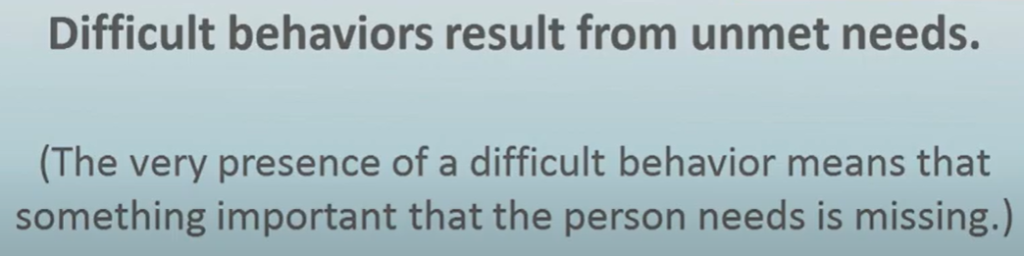
You can ask for a “functional behavior assessment” (FBA) to determine why and when your child is displaying the inappropriate behaviors and how best to respond. With that information, the ARD/IEP committee can develop a Behavior Intervention Plan (BIP) which becomes a part of her IEP. The plan should identify what your child should be taught or learn and the supports or services your child needs so they do not display the inappropriate behaviors – not just list consequences for misbehavior.
As of 2026 school year, due to HB6, Teachers can remove students from class based on a single incident of “interfering,” “unruly,” “abusive” or “disruptive” behavior. Principals can now place students in a DAEP for a single incident that “seriously” interferes with teaching or learning. These terms are not clearly defined and are open to interpretation. The school must conduct a meeting within 3 days of the removal. The school MUST create a return to class plan.
In school suspension (ISS) no longer has a time limit; but is subject to a 10-day review of educational access and ISS placement. Students in preK to 2nd grades and homeless students can now be placed in out of school suspension (OSS) for “significant disruption”. Placement in OSS is limited to 3 days and schools must provide access to school work. Districts can create virtual expulsion programs. Expulsion is the most serious disciplinary consequence. An expelled student is removed from their regular school campus and can be placed in a DAEP, a juvenile justice alternative education program (JJAEP), or a Virtual Expulsion Program. The student cannot return to any school in their district until their expulsion ends. The school district is required by law to provide a plan to help with their re-entry to the school. Disability Rights Texas has a sample plan available.
There are still some protections for students with disabilities. If your child has a disability, the school must determine if the behavior was a manifestation of that disability before a Disciplinary Alternative Educational Placement (DAEP) longer than 10 days or for an expulsion longer than 10 days. For DAEP, always check your school district’s Code of Conduct for specific time frames for specific offenses. The meeting for placements longer than 10 days is often called a manifestation determination meeting. Ensure your school proves that your child had intended to engage in that specific behavior.

Here are some questions about DAEP placements to ask:
- “Is this a mandatory or discretionary placement? If discretionary, what alternative punishments were considered?”
- “How did my child’s conduct justify their removal from the classroom to a DAEP?”
- “Does the district have a Behavior Agreement policy that would allow for reduced stay? How can we begin the process?”
If your child is being Expelled, here are additional questions to ask:
- “Is this a mandatory or discretionary expulsion? What specific felony or conduct is being alleged?”
- “Can we receive a copy of all substantiating documentation (witness statements, video, or law enforcement reports) at least 48 hours before the hearing?”
- If we are in a virtual program, “when is the first 45-day review scheduled to see if an in-person JJAEP spot has opened up?”
Texas Education Agency and Statewide Leadership Projects related to Behavior & Emotional or Mental Health Issues:
- Behavior Supports & Guidance for Students with Disabilities (pdf)
- Three C’s of Behavior Management for Students with Complex Needs course – Connection, Communication, Choice
- TEA Discipline Flowchart (pdf)
- Disability Rights Texas Interactive Discipline Guide and School Discipline Updates for the 2025-2026 school year.
- Texas Appleseed – NEW March 2026 – Back to School New Rules
- Texas Statewide Leadership for Autism Training (Region 13 ESC) – This website has free online training related to Emotional and Behavioral Evaluations, as well as fact sheets in the TARGET Manual related to Functional Behavior Assessment and Positive Behavior Supports.
- Texas Education Agency School Health – Students with Special Health Needs – In accordance with HB 1322 passed by the 81st Legislative Session in 2009, TEA added fact sheets to its website on specific disabilities. Fact sheets (in pdf format) offer an overview of the disorder, symptoms or behaviors associated with the disorder, educational implications, and instructional strategies and classrooms accommodations that might be provided.
- The Legal Framework for the Child Centered Special Education Process (Region 18 ESC) – Emotional Disability
- TEA Mental Health & Behavioral Health
- TEA Restorative Practices Made Simple Video Series
- I Messaging: How you phrase redirection and correction is a vital aspect of correcting and changing behavior (Video)
- Family Respect Agreement: Developing a Respect Agreement for the Home (video)
- Texas School Mental Health has a School Mental Health Practice Guide & Toolkit (pdf)
- TEA – Guidance on Restraint and Time-Out
- U.S. Dept. of Education, Office for Civil Rights – Dear Colleague Letter: Restraint & Seclusion of Students with Disabilities
- U.S. Dept. of Education – Restraint and Seclusion Resource Document
- TX HHSC & PAX – GoodBehaviorGame is a school-based, classroom preventative intervention used by educators to teach self-regulation.
- University of Houston Clear Lake – Dialectical Behavior Therapy Skills Videos – Mindfulness, Interpersonal Effectiveness, Emotional Regulation, Distress Tolerance
*****
Association for Positive Behavior Support – Links to Positive Behavior Support resources for families, including examples of PBS plans, PBS Practices fact sheets, research-based case study summaries, and articles about parenting and behavior.
Behavior Analyst Certification Board – Find out what is involved in becoming a board certified behavior analyst (BCBA) and locate a certified provider.
Center for Parent Information and Resources – See Behavior Assessments, Plans and Positive Supports and Behavior Assessments, Plans and Positive Supports.
Center for Social and Emotional Foundations for Early Learning – This website is focused on promoting the social emotional development and school readiness of young children birth to age 5. There are FREE training modules for parents, tip sheets, scripted stories for social situations, videos and tools for developing behavior support plans. They also have short training packages based on the What Works Briefs topics that include PowerPoints, notes pages, activities and handouts.
Children’s Mental Health Network – A Framework for Safe and Successful Schools (pdf)
Collaborative for Acadehttps://www.nasponline.org/https://www.nasponline.org/resources-and-publications/resources-and-podcasts/school-safety-and-crisis/systems-level-prevention/a-framework-for-safe-and-successful-schoolsmic and Social Emotional Learning – CASEL was founded in 1994 by Daniel Goleman, the author of Emotional Intelligence, to advance the science and evidence-based practice of social and emotional learning.
David Pitonyak – Ten Things You Can Do To Support Problem Behavior; Seven Questions to Guide a Support Plan
Depression and Bipolar Support Alliance – DBSA offers information about mood disorders, support groups and their various chapters. The site also offers advocacy advice and confidential screenings as well as a way to join the DBSA e-mail list. Also available in Spanish.
Disability Rights Texas – Has a resource titled “Your Rights, Your Voice: A Guide to Mental Health Concerns Transitioning to Adulthood” to help transition age youth learn about their rights and provide tools to help them transition successfully to adult life. Also one of their priority areas focuses on ensuring students with disabilities are not wrongly disciplined, and that students in alternate settings receive a free appropriate public education.
Florida Mental Health Institute – Recognized as Florida\’s premier research and training center for behavioral health services and a recognized national leader dedicated to improve the lives of people with mental, addictive, and developmental disorders through research, training, and education.
Gentle Teaching – This site discusses the “Gentle Teaching” instructional strategy – “a non-violent approach for helping people with special needs and sometimes challenging behaviors…” It includes a web link to the Gentle Teaching International home page.
Hogg Foundation for Mental Health (University of Texas at Austin) – Resources include A Guide to Understanding Mental Health Systems and Services in Texas.
IDEAS That Work! – Families: Social, Emotional, and Behavioral Skills
- Supporting Student Behavior
- Partnering with Schools
- Secondary Transition
LEAPS – FREE downloadableFamily Talk Activities designed to help families talk about important social and emotional behaviors.
Mental Health America – This website includes mental health information, news releases, advocacy information, free publications and more. Many articles are also available in Spanish.
Mental Health Texas – Texas Health & Human Services website promoting mental health awareness in Texas.
National Alliance on Mental Illness (NAMI) – This grassroots mental health organization is dedicated to improving the lives of persons living with serious mental illness and their families. Their site includes advocacy information, support groups, mental health information and resources.
National Alliance on Mental Illness of Texas (NAMI Texas) – This statewide mental health organization works to improve the lives of people affected by mental illness through education, support, and advocacy. It has 27 local support groups throughout Texas.
National Association of School Psychologists – The website of the National Association of School Psychologists. It includes their position papers on a number of educational, behavioral, and assessment issues.
National Institute of Mental Health – Look under Health & Education for topics and resources related to Child and Adolescent Mental Health.
OSEP Technical Assistance Center on Positive Behavioral Intervention and Support (PBIS) – This is the home page for the OSEP Technical Assistance Center on Positive Behavioral Intervention and Support (PBIS). The purpose of PBIS is to give schools information and technical assistance to identify, adapt, and sustain positive behavioral interventions and supports school-wide. Resources include Supporting and Responding to Behavior: Evidence-based, positive, proactive, and responsive classroom behavior intervention and support strategies for teachers
Pacer Center Resources – My Child\’s Social or Emotional Needs at School
Center on PBIS Positive Behavior Interventions and Support – improve the capacity of state educational agencies (SEAs), local educational agencies (LEAs), and schools to establish, scale-up, and sustain the PBIS framework to (a) scale up tier 2 and 3 systems to improve outcomes for students with or at-risk for disabilities, (b) enhance school climate and school safety, and (c) improve conditions for learning to promote the well-being of all students. Download Family Plan for Positive Behavior at Home / Apoyando a Familias con PBIS en el Hogar
Project IDEAL – A website devoted to providing teacher preparation, but a good resource for families. They have specific online training modules on Managing Behavior. This project also offers a definition & characteristics of those with Emotional Disturbance.
Substance Abuse and Mental Health Services Administration (SAMHSA) – This National Mental Health Information Center site includes resources such as mental health FAQs, a mental health dictionary, free booklets on children’s mental health and anxiety management, grant projects, and a Behavioral Health Treatment Facility Locator. Also available in Spanish.
School Mental Health.org – This site offers school mental health resources not only for clinicians, but also for educators, administrators, parents/caregivers, families, and students.
Search Institute – Website offers research based information on what kids need to succeed. Their listing of Developmental Assets offers the basic building blocks of positive development to help children grow up to become caring, responsible adults.
National Center for Pyramid Model Innovations – (formerly TACSEI) takes the research that shows which practices improve the social-emotional outcomes for young children with, or at risk for, delays or disabilities and creates FREE products and resources to help decision-makers, caregivers, and service providers apply these best practices in the work they do every day.
Texas Appleseed – Finding Help When You’re in Trouble with the Law:A Handbook for persons with Mental Illness and their Families / Encontrando Ayuda Cuando Usted Está En Problemas Con La Ley: Un Manual para Personas Con Enfermedades Mentales y Sus Familias
Texas Health & Human Services – Information on where to get Mental Health and Substance Abuse services in Texas. See also:
- Children’s Mental Health/Salud mental infantil y juvenil
- Adult Mental Health/Salud mental del adulto
- Mental Health Crisis Services/Recursos para la salud mental y el consumo de sustancias
- Mental Health & Substance Use Resources/Recursos para la salud mental y el consumo de sustancias
- Youth Substance Abuse/Consumo de sustancias en menores de edad
- Youth Empowerment Services Waiver (YES Waiver/Programa YES) – This program provides assistance for children and youth with serious mental, emotional and behavioral difficulties.
UCLA – Center for Mental Health in Schools – Offers online training and presentation resources for mental health in schools. Click on the “First Time” link and scroll down.
Understood.org – Social and Emotional Skills: What to Expect at Different Ages
US Dept of Health & Human Services Children’s Bureau – Video Series on Early Childhood Social Emotional Development and Mental Health and Caregiver Well-being
Wrightslaw – When Schools Have Children Arrested for School-Related Behavior Problems by Pete Wright, Esq.
Zero to Three (Early Childhood Resources) – The National Center for Infants, Toddlers, and Families that informs, trains, and supports professionals, policymakers, and parents in their efforts to improve the lives of infants and toddlers. They have a resource on infant and early childhood mental health. Developing Social Emotional Skills from Birth to Three
IRIS CENTER – The IRIS Center is a national center dedicated to improving education outcomes for all children, especially those with disabilities birth through age twenty-one, through the use of effective evidence-based practices and intervention. They just posted secondary versions for two of their most popular online modules. These are self-paced, and can be embedded in educator preparation courses and school or district PD activities:
- Addressing Challenging Behaviors (Part 1, Secondary): Understanding the Acting-Out Cycle discusses challenging behavior in terms of the seven phases of the acting-out cycle and offers strategies and tips for responding to students in each phase.
- Addressing Challenging Behaviors (Part 2, Secondary): Behavioral Strategies describes six low-intensity strategies that can increase initial compliance to teacher requests and prevent or decrease challenging behaviors.